“The Dance of the Frogs” Booklet
Typography | Bookmaking
The creation of a booklet converying how humanity has deviated from their natural roots. The essay, “The Dance of the Frogs” by Loren Eiseley, considers that though human awareness brings important advancements, it also isolates them from belonging to the natural world.
Process
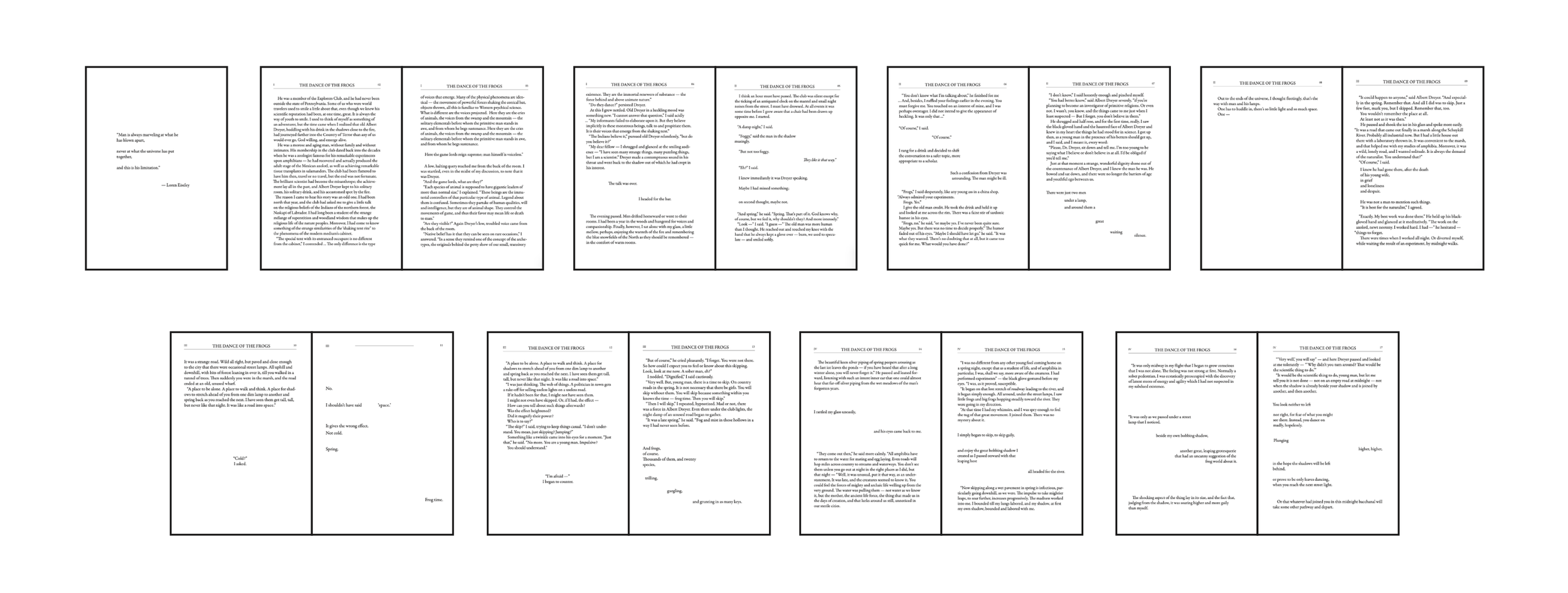
Thumbnails
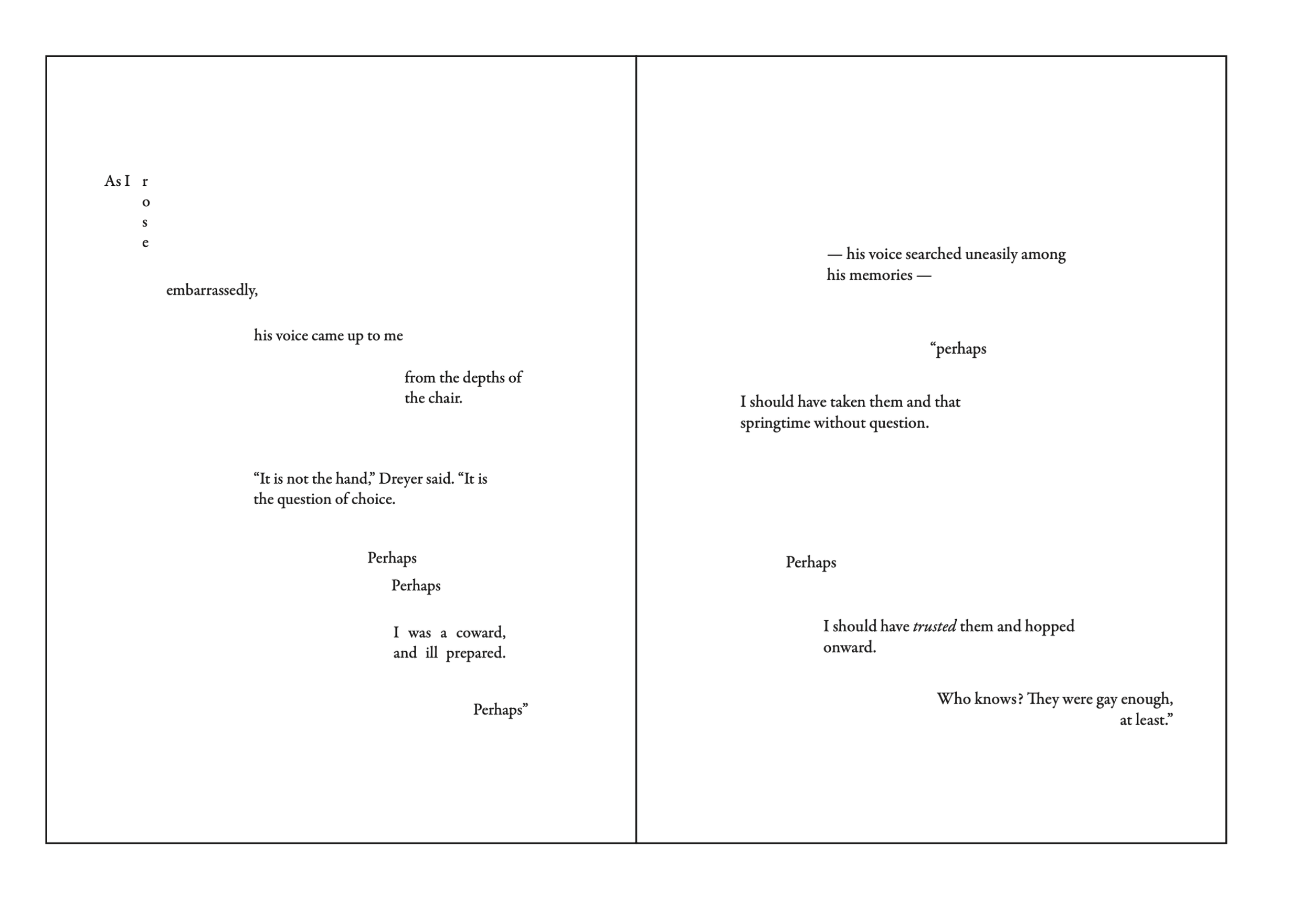
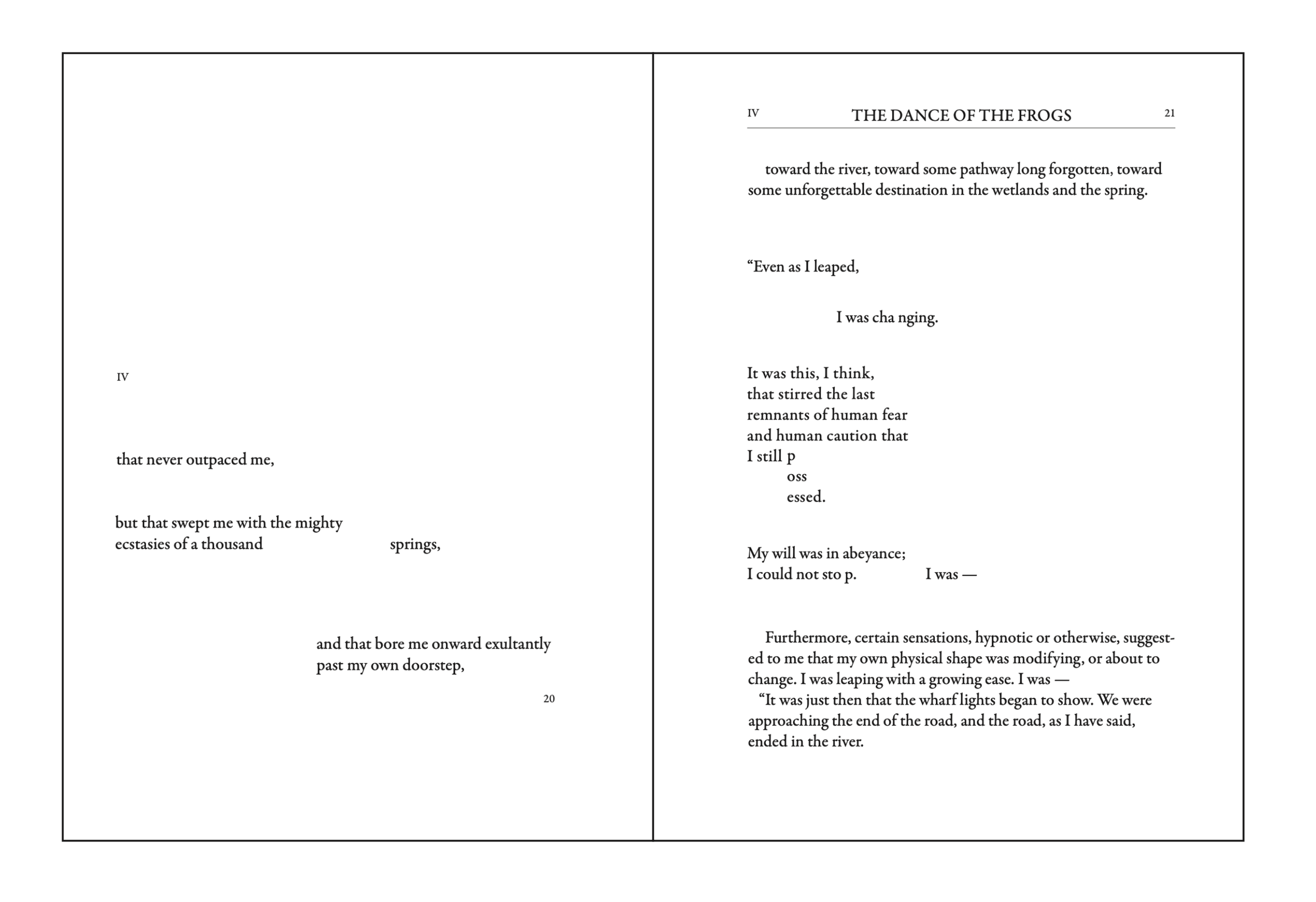
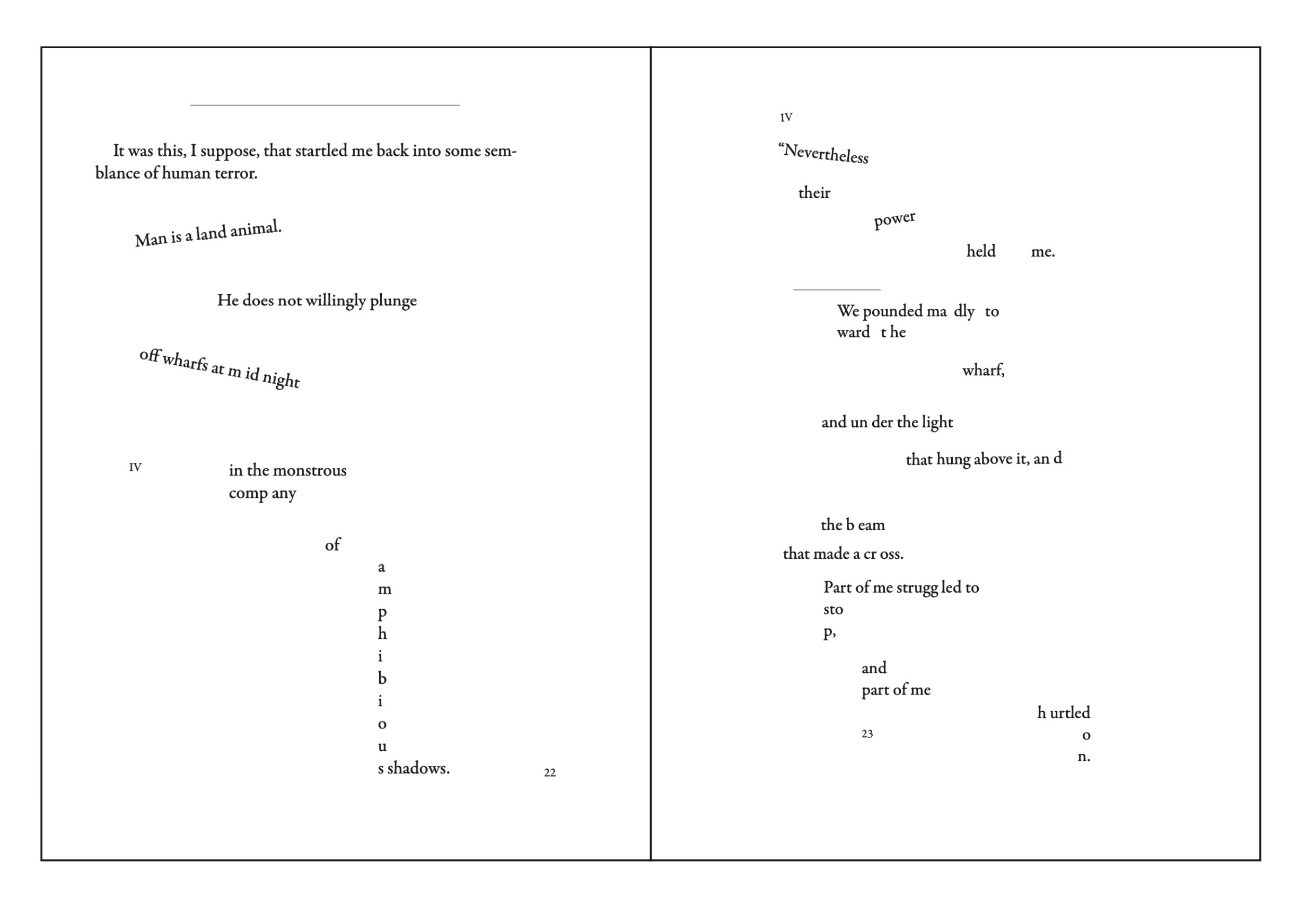
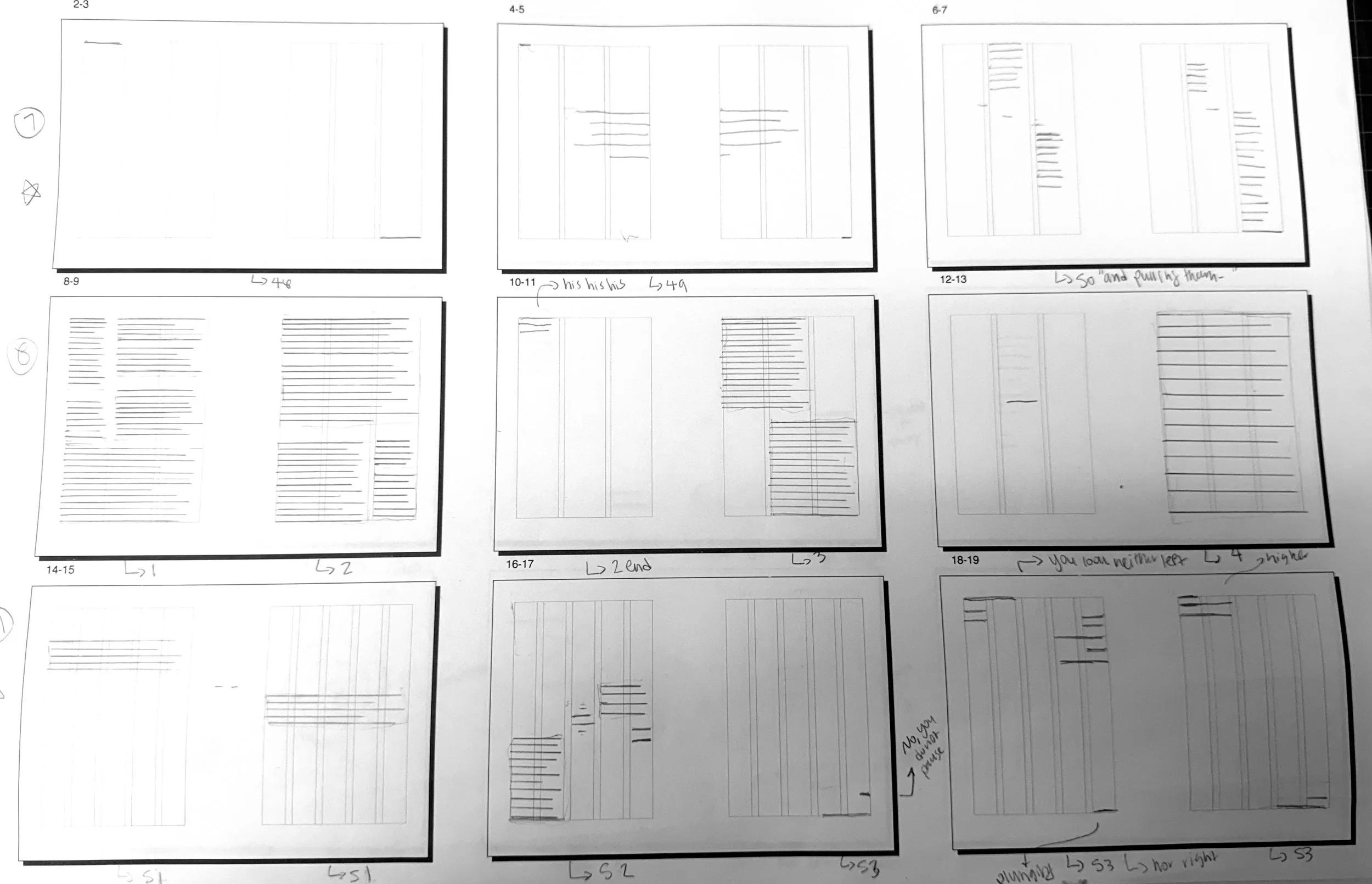
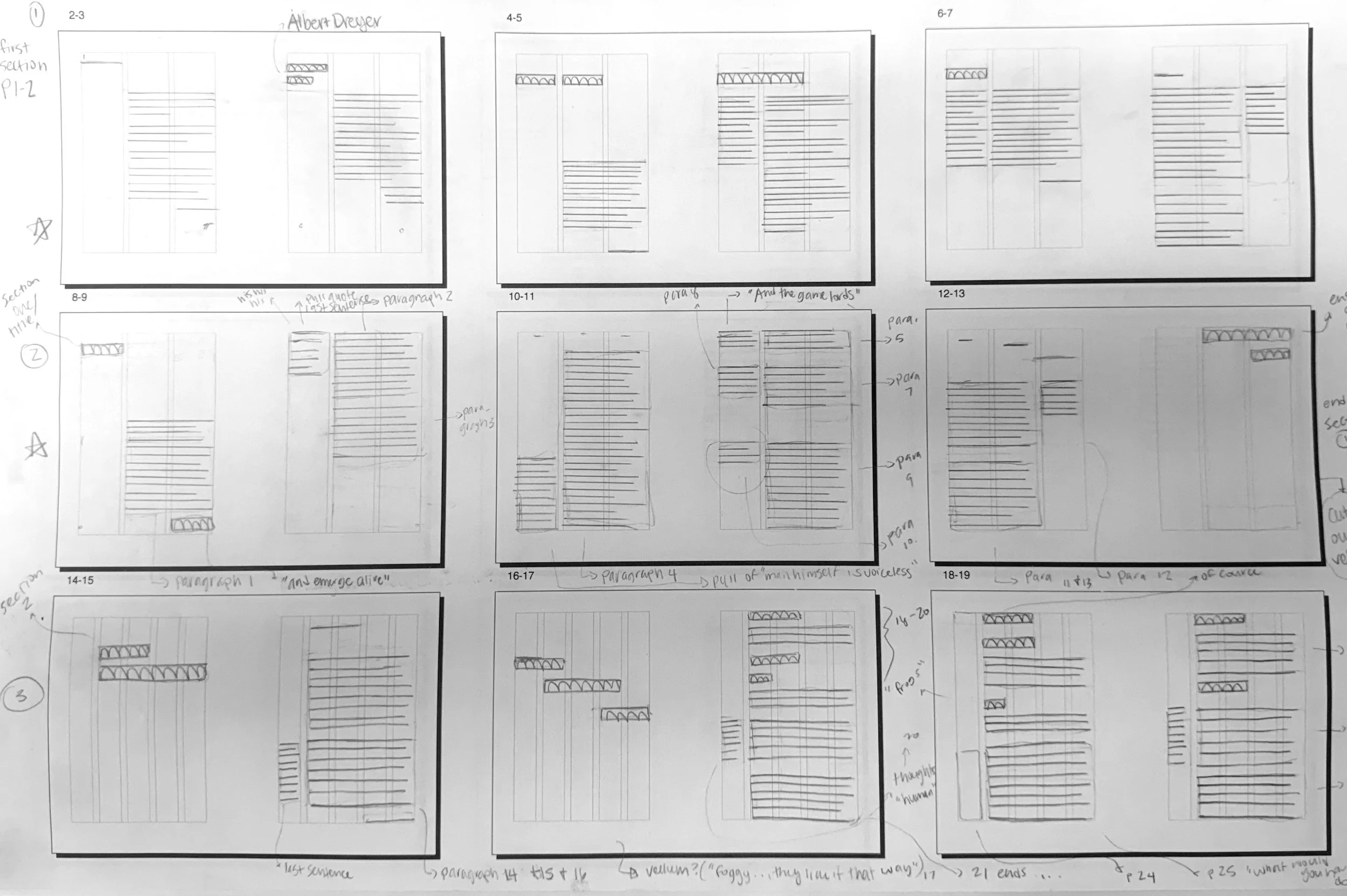
I decided to use different aspects of each thumbnail in my final booklet. I went through many iterations, having the text structured but also in smaller paragraphs. Each of the thumbnails represents a different idea of how to structure the text, from structured to free-flowing, and ultimately, from my thumbnails, the most accurate to the final would be the free-structured type setting and the isolated sentences on pages. I created revisions based on my concept, and my thumbnails were a starting point for exploration as the ideas became more refined.
Dimensions
Dimensions :: 4.5" x 6"
Binding :: Saddle Stitch (5 Holes)
Paper Type :: Arches Watercolor Paper Hot Press 90 Lbs
Cover :: Arches Watercolor Paper Hot Press 90 Lbs
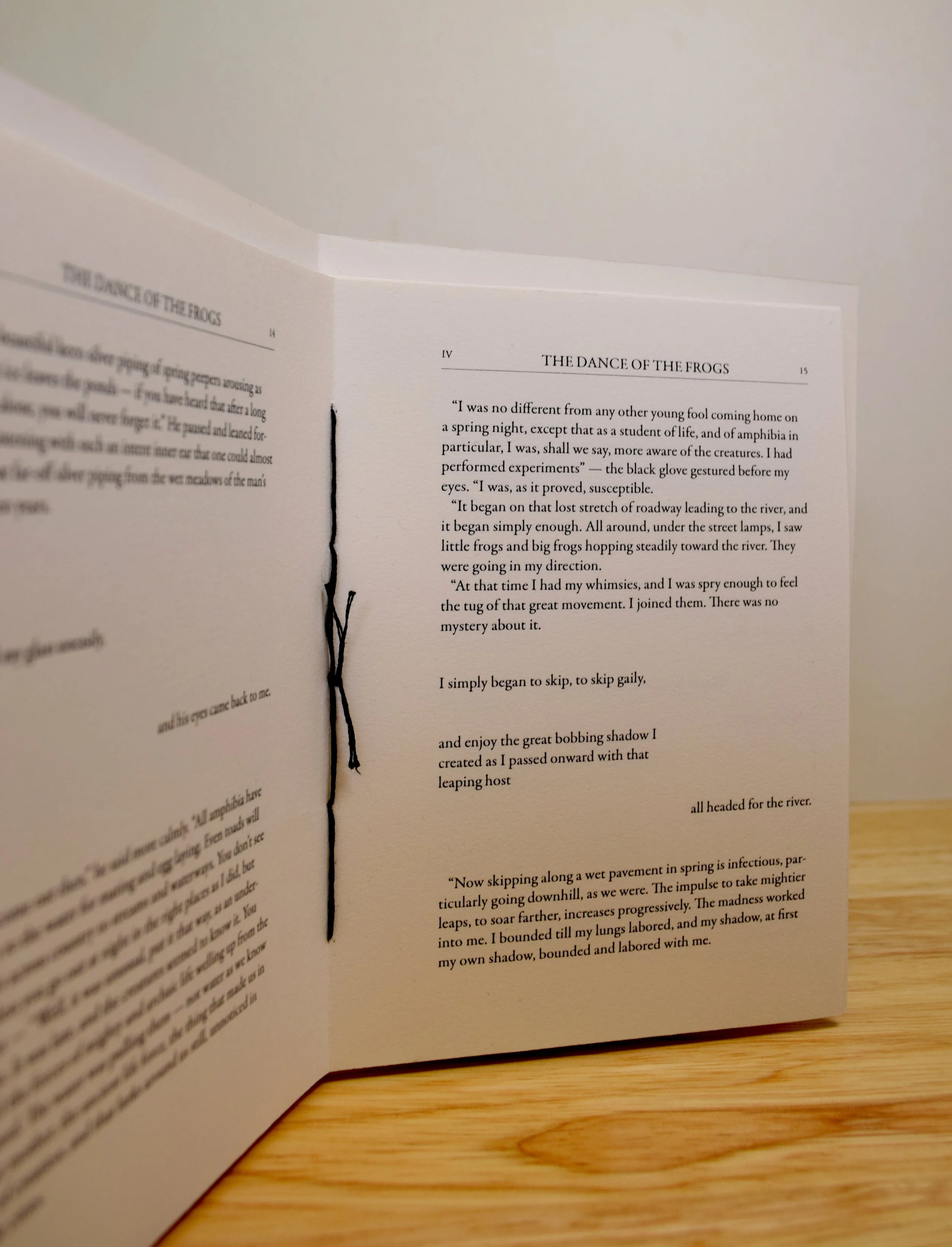
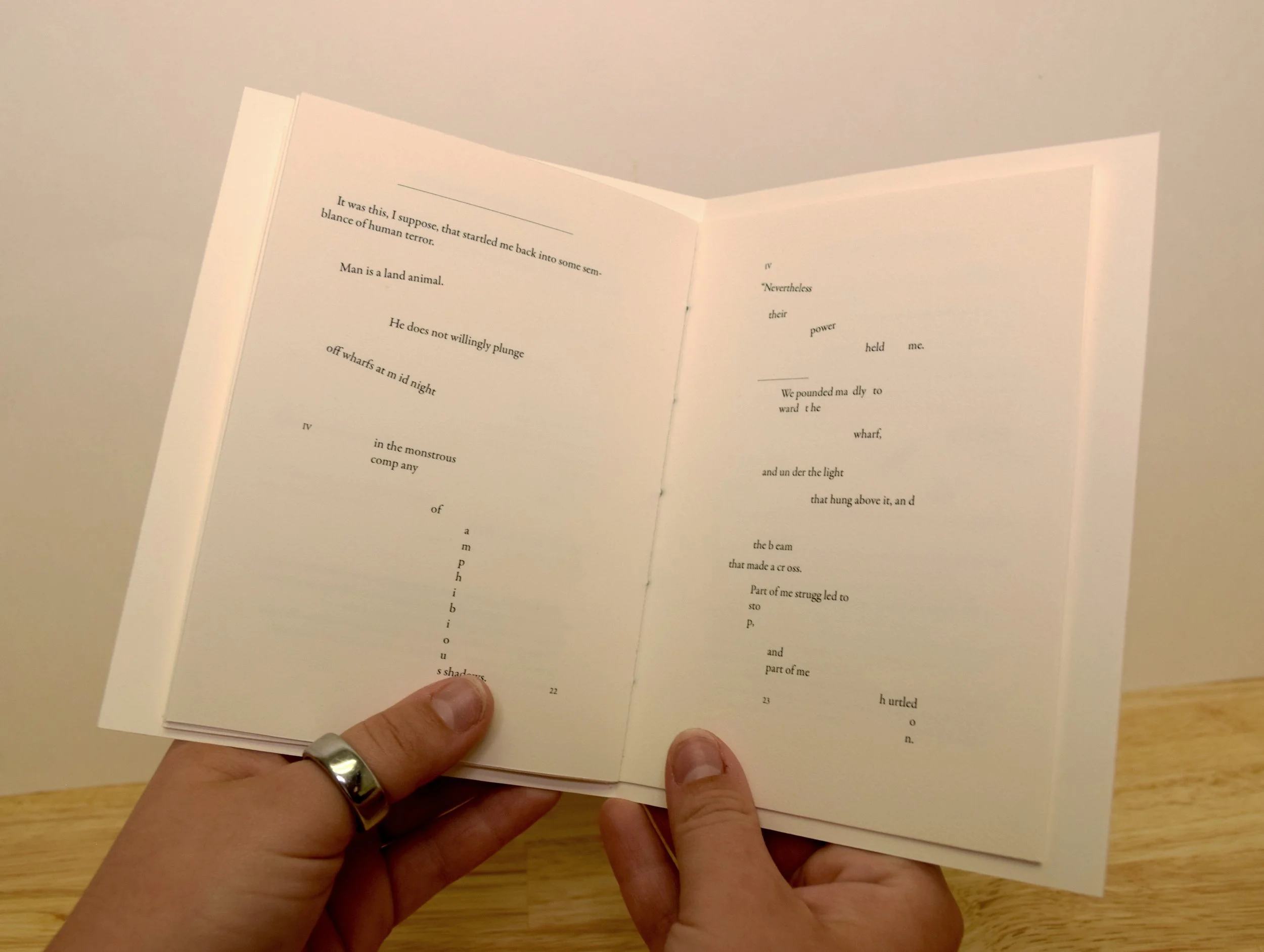
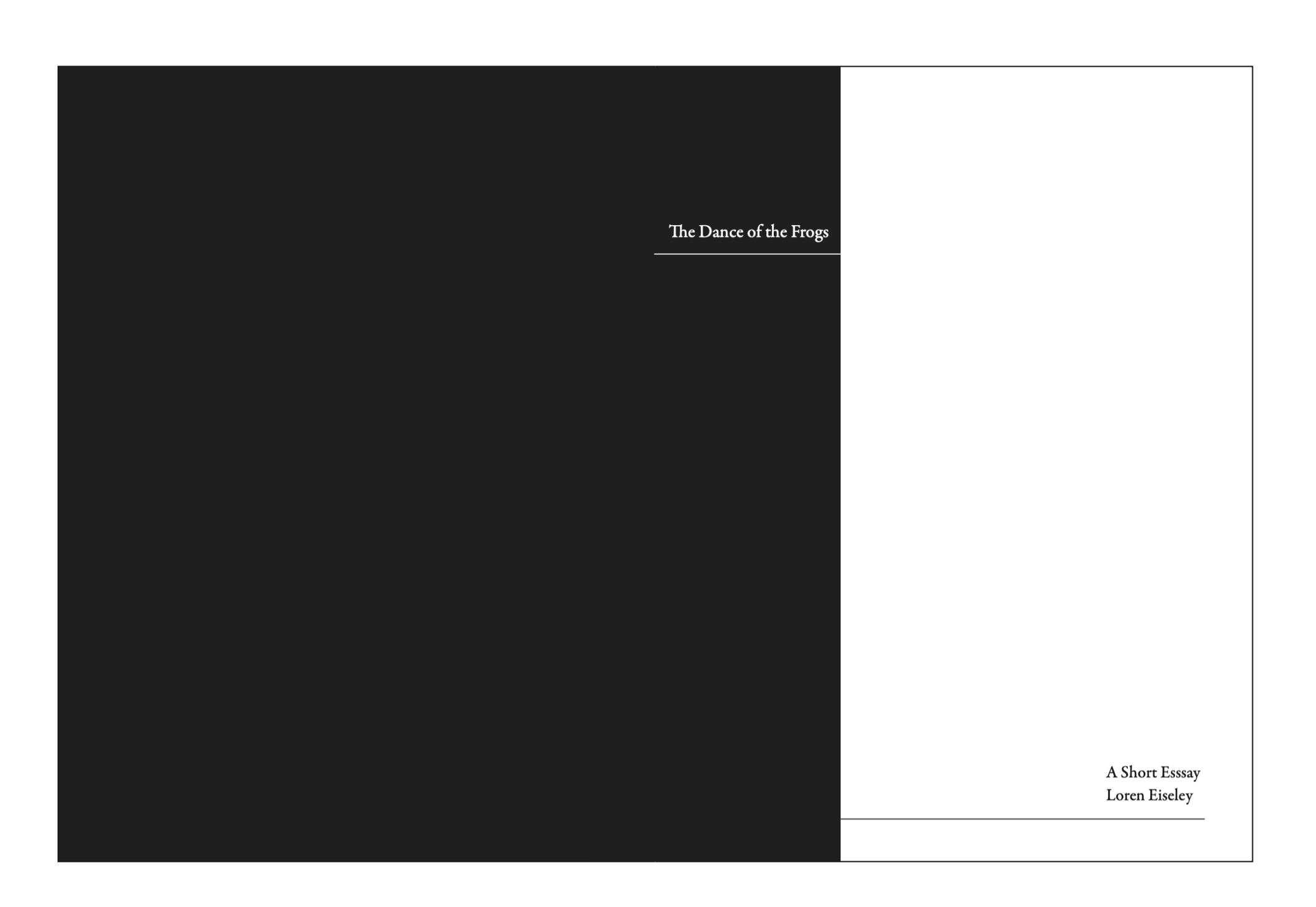
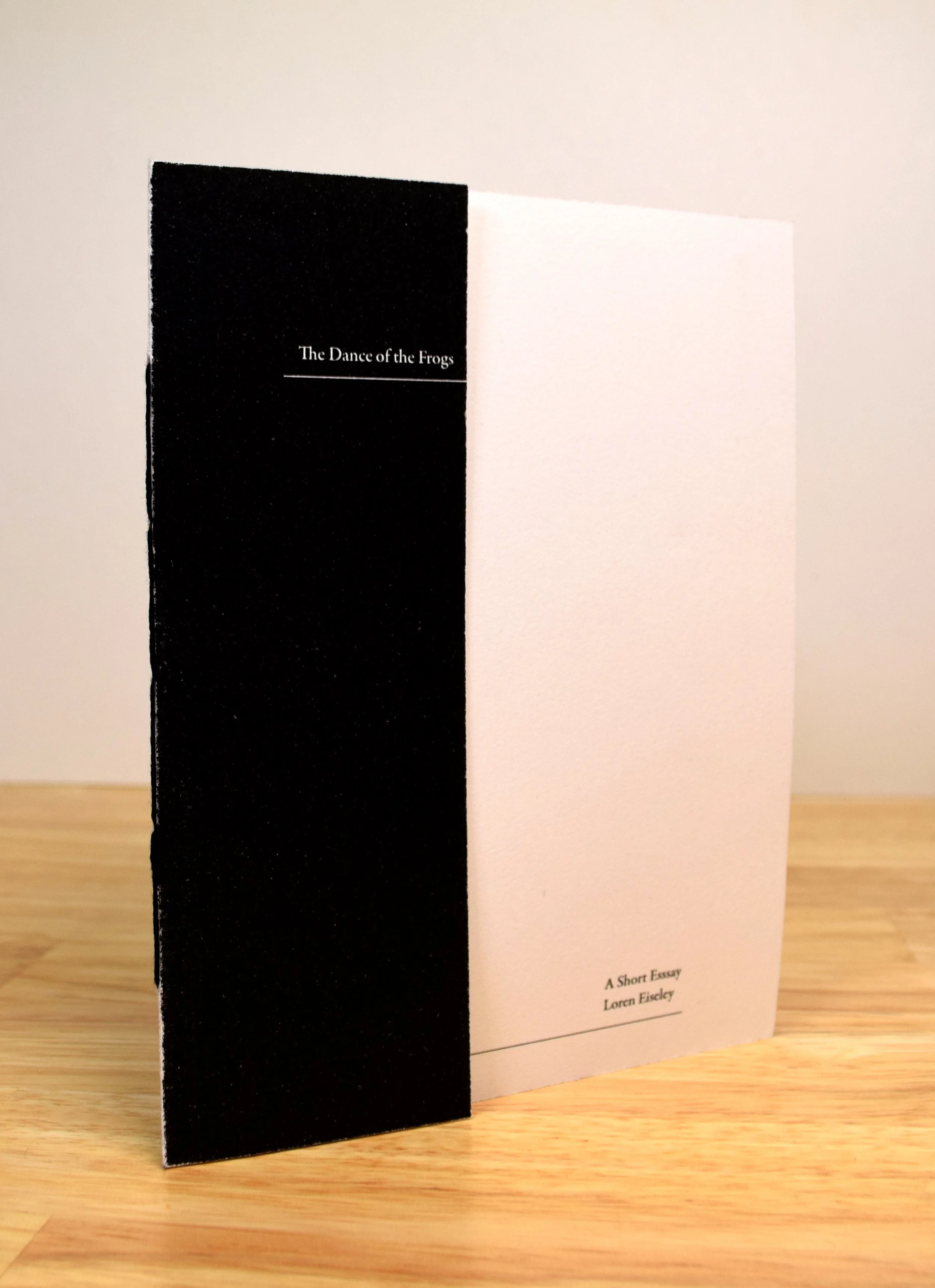
My choices for size, binding, and paper are intended to subvert the typical expectations of a booklet over the course of reading. The margins and size suggest a small research novel or field guide; however, as the reader becomes immersed in the story, the poetical, naturalistic elements highlight the meaning of the essay. The paper is thick and allows for a feeling of a luxurious reading experience, and the larger cover suggests something hidden or secret. The booklet is meant to stand out as a secret and be uncovered by the reader.
Grid System & Type Family
Garamond Premier Pro
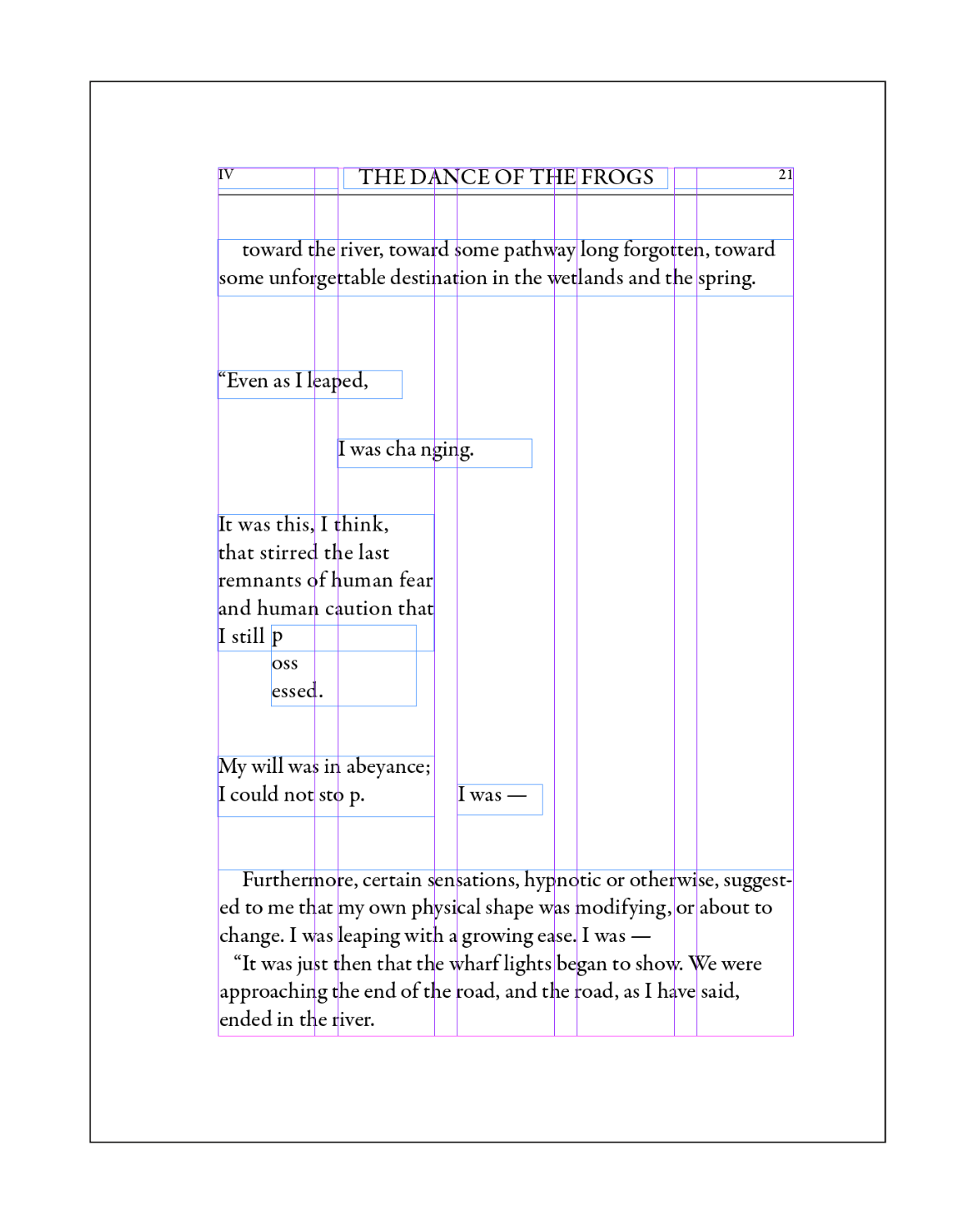
I selected a typeface that reads as academic with a human touch. The type has a personality that makes it highly readable and appears both academic and inviting to read. It aids my concept as humanity takes naturalistic qualities to extremes, as the text can be both highly readable and inviting, becoming broken and remaining beautiful and readable. The lines and smaller numerical and heading text emphasize the observational and advanced stance humanity has taken in nature as it slowly becomes broken.
Grid System
I chose to form my grid system to match that of academic and field journal texts, referencing the academic nature of Dreyer and the narrator’s conversation and studies. This text treatment led to five-column paragraphs running from margin to margin. As the essay continues, the text transforms into a poetically inspired reading, referencing the naturalism of Dreyer’s experience and, by extension, the experience of humanity.
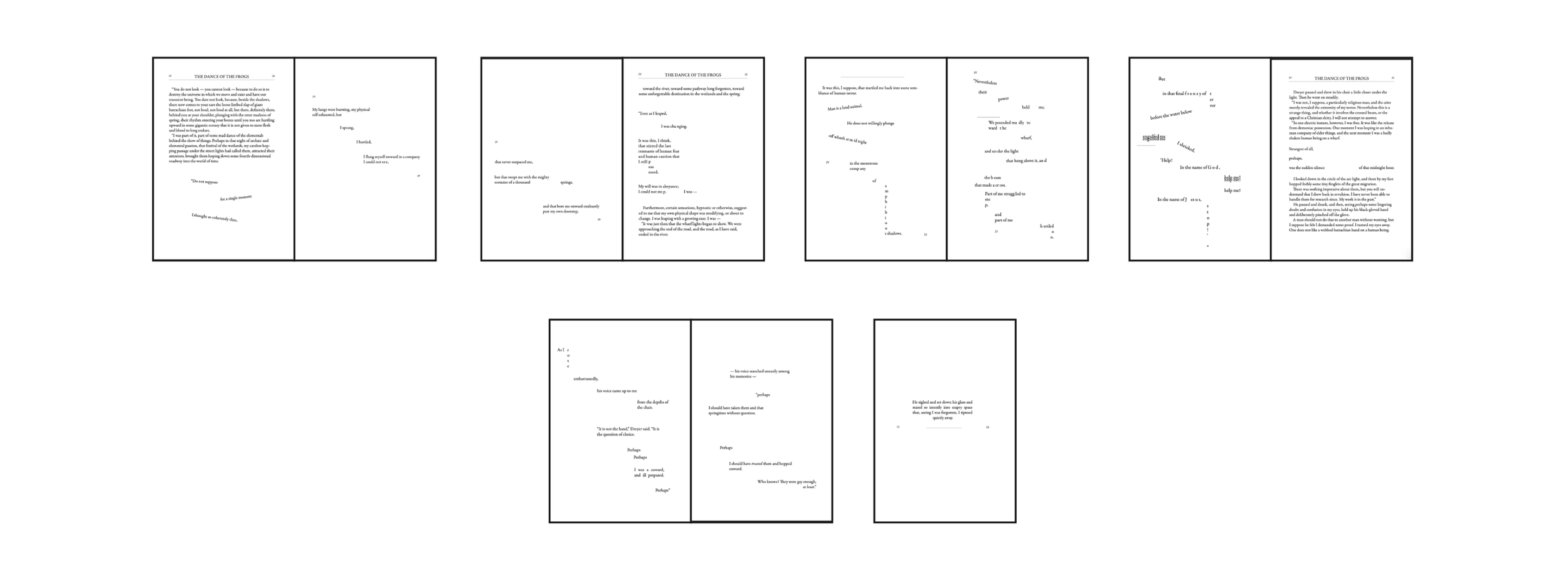
Final Flat Plan
The text begins very dense and academic and slowly transforms into a free-flowing poetic experience. The final page leads the reader to consider that, though the experience shifts Dreyer’s view of the world, he still sees himself as overcoming nature and, therefore, as an observer and, therefore, isolated.
Book Cover
Feature Spreads